When to come?
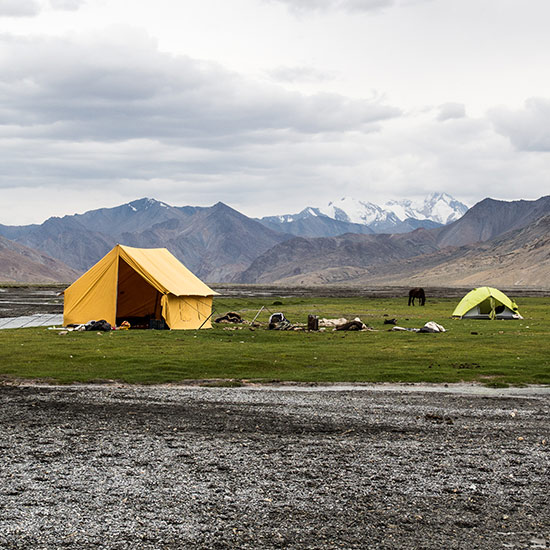
Ladakh is open for tourist throughout the year, while the best period for tour and trek is from June to October. Most of the trekking routes
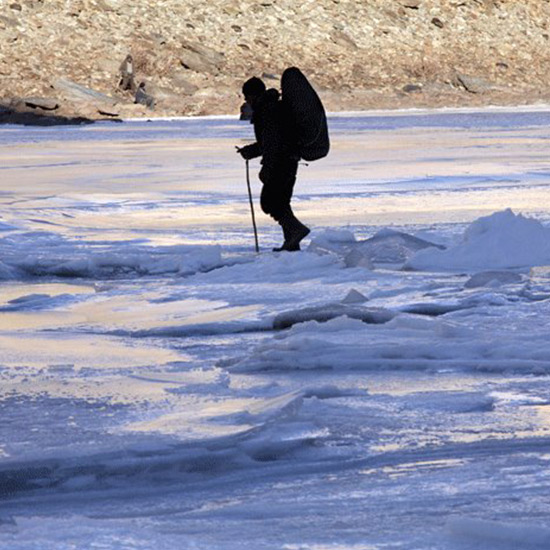
are closed after November due to heavy snowfall at high passes except the Liker to Kahltsey (Sham) trek. The best period for Chadar trek is from January to Mid-March. The festivals of Stok, Matho and New Year take place in winter. It is possible to visit monasteries in winter, as there are many centrally heated hotels in Leh.
back to top
What to bring?
Clothing: The Temperature in mid summer is pleasant and t-shirt and half pant in the daytime and in Evening temperature come down and need Jacket or pullover. While trekking above 4000m, you need warm cloth. Sometimes there is a rain or snow in early June therefore you need Wind sheeter or raincoat.
Shoes: Good waterproof shoes are needed while trekking and extra pair of shoes and Sandal is useful while crossing the rivers.
Ruck Sack: Two Ruck Sack is needed. One small handbag for your Camera, Water bottle, Pack lunch and a space for Jacket. Bigger one for carrying Clothes with extra layer to be safe from rain and dust.
Sleeping Bag: Warm sleeping Bag.
back to top
How to reach?
Air-Indian Air Lines operates regular flight to Leh from Delhi, twice a week between Leh to Jammu and once a week from Srinagar. Jet Airways Operates daily flight between Leh to Delhi.
Road There are two overland routes the Srinagar to Leh road remains open from early June to November. The Jammu and Kashmir State Road Transport Corporation operates regular deluxe and ordinary bus services.
The Manali - Leh road remains open from mid June to early October. Himachal Pradesh tourism, HRTC and Manali private bus union, operates a daily bus services, which takes two days to reach Leh, after a night halt at Sarchu or Darcha.
Taxi- Taxies are also available at Leh, Manali and Srinagar.
back to top
Climate
Temperature in summer (June to September) can touch 30C and -20C in late December and January. Annual rainfall is 6".
back to top
Permit and Passport
Tourist don't require permit for Leh; however,
all foreigners are required to registered at Drass, Rumtse and Sarchu if they are traveling by road. Those traveling by air get themselves registered at the airport. The tourist are required to get a permit for restricted areas like Tsomoriri, Tsokar, Pangong Lakes, Dhahanu and Nubra Valley, which can be obtain through registered travel agencies. Make it sure to carry six photocopies of the permit while traveling, to submit at the Checking points.
back to top
Money Exchange
All the money should be changed with authorized moneychanger, available at various places. You should insist for a receipt, which will help you in reconverting the money whenever you desire.
back to top
Time difference
The standard time of India is calculated from Alahabad, and is common to all cities in the country. Indian standard time (ISD) is 5 hours
and 30 minutes ahead of London, 4 hours and
30 minutes ahead of Paris and about 10 hours
and 30 minutes behind New York.
back to top
Credit Cards
Credit Cards are not accepted by most of the hotels and travel agents except some antique shops.
back to top
Post and Telecommunication
Telephone & Fax and post facilities are available in Leh, Padum, Kargil and Nubra valley. Internet Services- Internet, Email services are available in Leh only.
back to top
Plastic Bags
Do not use plastic bag since plastic is officially banned in Ladakh. Always separate and properly dispose off litter burns burnable, bury biodegradable materials while trekking.
back to top
National Parks
Don't distrub wild life during the trek; be aware of the highly sensitive ecology and the economy of the geographical and cultural landscape.
back to top |
Avoid Acute Mountain Sickness
Acute mountain sickness can occur to any one
at an altitude above 10,000 ft. from the sea level. The most common symptoms of acute mountain sickness are headache disturb sleep loss of appetite, nausea, coughing, irregular breathing, breathlessness, lassitude and lack of concentration. Since Leh Town is situated at
an altitude of 11,500 ft. above sea level. It is advisable to take the following precautions, so
as to acclimatize your body properly.
1. Take complete rest for the first 36 hours
of your arrival at Leh. However, this period
may vary with different people.
2. Your body should get used to the lower
oxygen levels.
3. Incase you develop any of the above-mentioned symptoms, please consult a Doctor.
back to top
Rescue and precaution
for mountaineering and
trekking in Ladakh
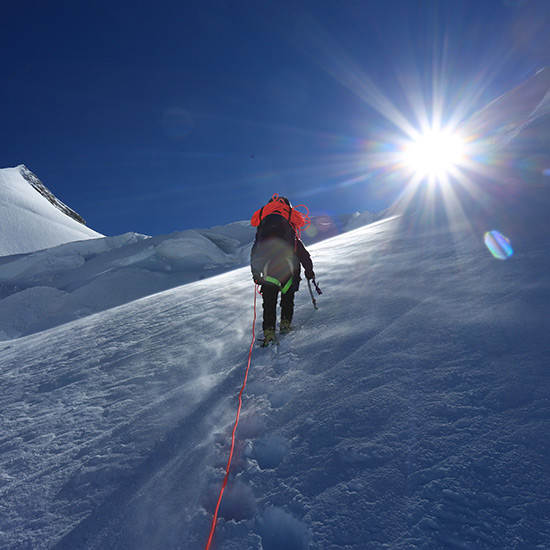
Tourist undertaking mountaineering and trekking in Ladakh, whether in groups or individual, should take some precuations. There is no private aerial rescue agency in Ladakh and only as a life saving measure; engaging the Indian Air Force help in evacuation.
Government of India Ministry of Defence has authorized the station Commander, Air Force Station Leh, to airlift for rescue cum causality evacuation of members of mountaineering expedition and trekking parties in distress in
the available IAF aircraft helicopter on the following conditions: -
1.The evacuees should give an undertaking to
the effect that payment on account of the cost
of the aircraft for rescue will be borne either by the travel insurance company or by the individual concerned.
2.The evacuees are also responsible for reimbursements of loss/ damage to the aircraft/helicopter while undertaking the
task of rescue causality evacuation, deviation, diversion, return to base and for the liabilities
due on above account-to IAF, as well as compensation to any individual including the aircrew, which may become payable as a result
of any accident/incident.
3.The authorities empowered to place the demand for airlift of any causality require the following forms to be filled by the evacuess for settlement of bills with air force headquarter.
a.Form of guarantee of full payment.
b.Form of acceptance certificate.
c.Form of indemnity bond.
d.Photocopy of insurance policy card.
e.Photo of passport.
All the above forms can
be obtained from Dy. Director, TRC Leh.
back to top
Tipping
Tipping has become common in Ladakh, as pony men, helpers, guides and cooks expect tips after finishing the tour. Big hotels and restaurants already charge 10% service charge.
back to top
Photograhing of People
Take permission before you click a photograph of any one. Don't take photo if they ask for money.
back to top
Water purification
Take water purification piles with you. And you can use boiled fresh water during the trek.
Dzomsa Laundry sells high pressure boiled water for Rs.7 per liter. Bring you own water container.
back to top
Books
Reach Ladakh by Tundup Dorjey is only Guidebook providing basic, Trekking and all other tourism related information on Ladakh. Cross road to high Asia by Janet Rizvi from oxford university press, gives through information on Ladakhi history and culture. Ancient Feature Learning from Ladakh by Helena Norbag gives information regarding farming system and culture in Ladakh. Getting started to Ladakhi by Rebecca Norman is recommended if you are interested in learning a few Ladakhi phrases. The Monasteries of Ladakh by Ge. Thupstan provides historical background of the monasteries.
back to top
Other Guide Books
Detail trekking information is offered in a guidebook "Trekking in Ladakh" by Charlie Loram from Trail Blazer Publications. Reach Ladakh, trekking in Ladakh and Zangskar and Trekking in Indian Hilmalaya by Lonely Planet.
back to top |